Your Residential Gym Is More Than an Amenity. It Can Be a Resident Wellness Advantage.
Your Residential Gym Is More Than an Amenity. It Can Be a Resident Wellness Advantage.
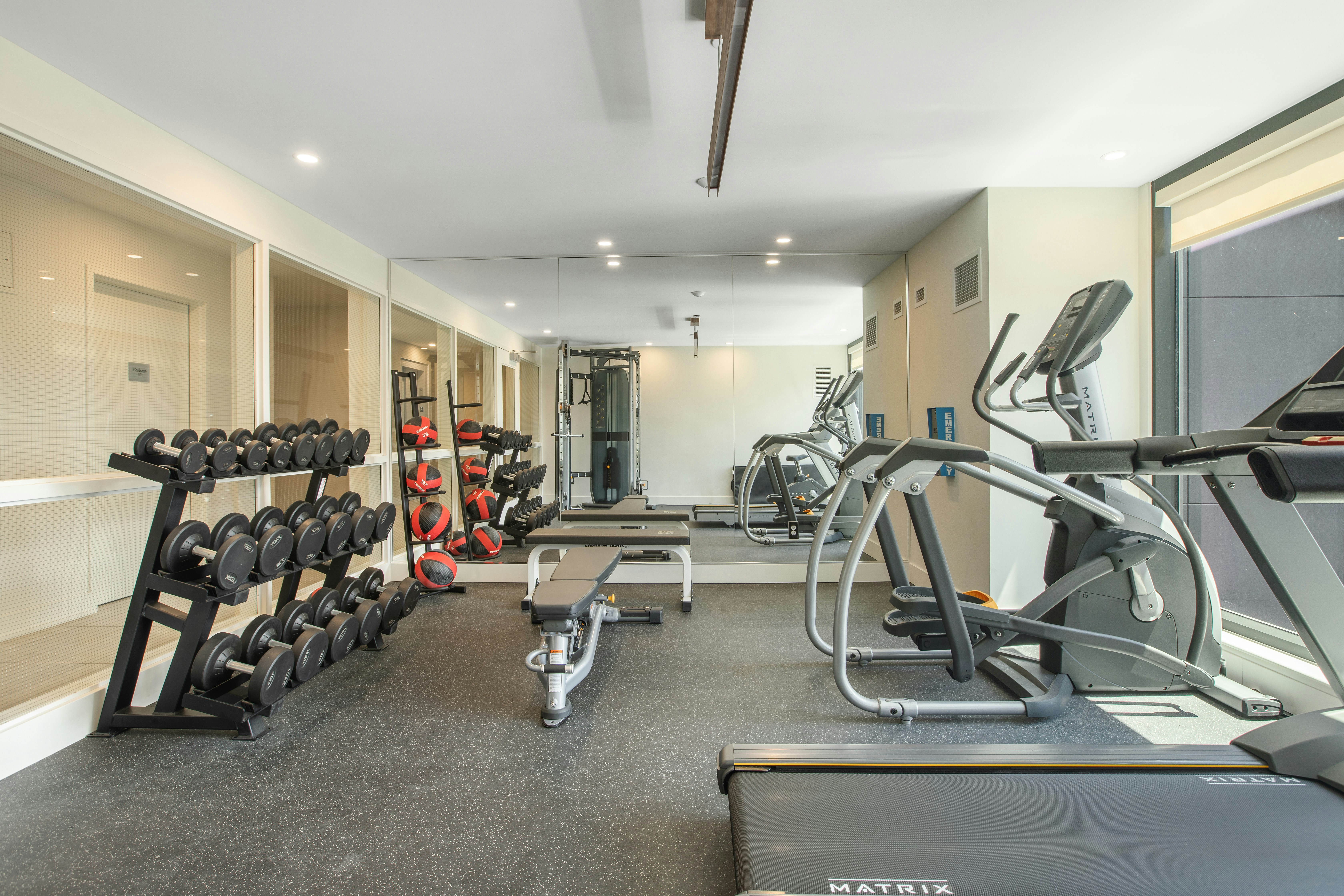
Walk through almost any modern residential building in New York City and there is a good chance you will find a fitness center.
Treadmills. Dumbbells. Cable machines. Benches. Maybe a stretching area, Peloton bikes, or even a full strength training setup.
The building invested significant space and money into creating the gym.
But there is one question that often gets overlooked:
Are residents actually getting the full value out of it?
At Ten Fld NYC, we believe residential gyms have enormous potential. The problem is that simply providing fitness equipment does not automatically create a fitness experience.
The next evolution of the residential gym is not necessarily adding more equipment.
It is adding the right system around the equipment that is already there.
The Residential Gym Is Often an Underutilized Asset
For many residents, having a gym downstairs is one of the reasons they were excited about moving into the building.
Then reality sets in.
They walk into the fitness center and are not sure what to do.
They use the treadmill.
They try a few machines.
Maybe they follow a workout they found online.
Eventually, many residents end up joining an outside gym or searching for a personal trainer somewhere else, even though they already have a fitness facility a few floors away.
That is a missed opportunity for both the resident and the property.
In New York City's competitive residential market, wellness has increasingly become part of the amenity conversation. Luxury properties are continuing to expand beyond simply providing exercise equipment and toward more personalized wellness experiences and services.
A building may already have the square footage, equipment, and infrastructure.
What it may be missing is the professional service that connects residents to it.
There Is Another Problem: Who Is Training Your Residents?
Residents are also bringing outside personal trainers into building gyms every day.
That is not necessarily a problem.
The question is:
What does the building actually know about the trainer?
Are they currently CPR and AED certified?
Do they have liability insurance?
Has the building received a Certificate of Insurance?
What personal training certification do they hold?
Is that certification current?
What is their educational background?
Do they have experience working with older adults?
Do they understand how to train someone with previous orthopedic injuries?
Do they have experience working with residents who have medically controlled conditions?
Are they screening the resident before beginning an exercise program?
These questions become especially important in residential buildings because the population inside the gym can be incredibly diverse.
A trainer may work with a healthy 30-year-old resident at 8:00 a.m. and then a 64-year-old resident with a history of back pain, knee surgery, hypertension, or another medical consideration at 9:00 a.m.
Those two residents should not automatically receive the same approach.
A Certification Should Be the Beginning, Not the Entire Standard
The fitness industry has a wide range of certifications with very different educational requirements, examination procedures, continuing education standards, and practical expectations.
That makes it difficult for a property manager to evaluate a trainer simply because the person can put "Certified Personal Trainer" after their name.
Higher-level exercise credentials can require substantially more education. For example, the American College of Sports Medicine requires its Certified Exercise Physiologist candidates to have an exercise science, exercise physiology, or kinesiology-related degree in addition to current CPR/AED certification. ACSM describes these professionals as being trained to conduct fitness assessments and develop exercise prescriptions for healthy individuals as well as individuals with medically controlled diseases.
That distinction matters when your residential population includes adults across multiple ages, health histories, fitness levels, and goals.
The question should not simply be:
"Is this person a trainer?"
It should be:
"Is this trainer appropriately qualified for the resident standing in front of them?"
What Happens When There Is No System?
Imagine a 64-year-old resident with previous injuries and an existing health condition.
They want to become stronger, which is a great goal.
They meet a trainer in their building.
The trainer immediately begins putting them through workouts.
But there was no structured intake.
No health history.
No movement assessment.
No discussion of previous physical therapy.
No waiver.
No emergency information.
No documentation.
No clear understanding of what the resident can and cannot safely tolerate.
The workout may be difficult, but difficult does not automatically mean appropriate.
For a property manager, this creates a situation where an individual is providing a professional fitness service inside the building without the building necessarily having a consistent process for determining who that individual is or how they operate.
There is a better way.
The Ten Fld Residential Gym Model
Ten Fld NYC partners with residential properties to create a more professional personal training system inside the building's existing fitness center.
Instead of residents searching online, asking around for a trainer, or bringing an unknown fitness professional into the facility, the building can provide access to a trusted residential fitness partner.
Our team includes highly educated fitness professionals with advanced certifications and specialized experience across different populations.
Depending on the resident, that may include experience in:
Strength and conditioning
Older adult fitness
Corrective exercise
Parkinson's and neurological populations
Pre and postnatal training
Boxing
Sport performance
Mobility and movement
Cardiovascular conditioning
General health and fitness
Our approach is not to assign the same trainer to everyone.
We match the resident with the professional who best fits their goals, history, personality, and needs.
Every Resident Starts With More Than a Workout
A great residential fitness program should start before the first set of squats.
Our process can include:
Resident intake and health history
We learn about previous injuries, medical considerations, training history, lifestyle, goals, and anything else that may influence the program.
Waivers and documentation
Residents complete the appropriate forms before beginning services.
Movement and fitness assessments
When appropriate, we establish useful baseline information before designing the program.
Trainer matching
The resident is paired with a Ten Fld coach whose experience fits what that individual needs.
Individualized programming
The workout is built for the resident rather than forcing the resident into a generic workout.
Ongoing progression
As strength, mobility, cardiovascular fitness, confidence, or other abilities improve, the program evolves.
The result is a much more intentional experience inside the exact same gym the building already owns.
A Better Experience for Property Management
The benefit is not only for residents.
It creates a cleaner process for management as well.
Instead of wondering who is training inside the building, Ten Fld operates as an established company with professional liability coverage and documented trainer credentials.
Our coaches maintain the appropriate CPR, AED and/or BLS credentials required for their roles, and our company can provide Certificates of Insurance when required.
That gives property management a defined fitness partner rather than an uncontrolled revolving door of individual trainers.
It does not mean residents need to be prohibited from using their own trainers.
It simply gives the building something it may not currently have:
A trusted option it can confidently recommend.
Now Imagine the Leasing Tour
This is where the residential gym becomes much more than a room filled with equipment.
Imagine showing a prospective resident around the property.
You walk through the lobby.
The lounge.
The rooftop.
Then you enter the fitness center.
Instead of simply saying:
"We also have a gym."
Your leasing team can say:
"We also partner with Ten Fld NYC as our preferred personal training provider. Our residents can be connected with a qualified trainer based on their individual goals and needs, and every new resident receives a complimentary one-hour introductory fitness session."
That changes the conversation.
Now you are not only showing them equipment.
You are showing them a service.
The prospective resident can picture themselves actually using the gym.
Maybe they have been wanting to start strength training.
Maybe they are moving to New York and losing their current trainer.
Maybe their physician told them they need to exercise.
Maybe they are 70 and have never felt comfortable walking into a commercial gym.
Maybe they already train three times per week and simply want an experienced strength coach.
Instead of telling them, "Here is the gym," you are telling them:
"We have already created a pathway for you to use it."
That is a much stronger amenity story.
The Complimentary Residential Fitness Introduction
One of the simplest ways we can help a residential property activate its fitness center is by providing residents with access to a complimentary one-hour introductory session.
That session gives us an opportunity to understand:
their goals,
their exercise history,
previous injuries or limitations,
their current fitness level,
and what they actually want from the gym downstairs.
From there, the resident can be matched with the appropriate Ten Fld coach.
Some residents may want ongoing personal training.
Others may simply need an introduction to their building's equipment and a better understanding of where to begin.
Either way, the gym becomes more approachable.
Increasing Gym Utilization Without Rebuilding the Gym
Property managers often think about fitness amenity improvements in terms of physical upgrades.
A new treadmill.
Another rack.
New flooring.
Different machines.
Those investments can absolutely improve a facility.
But before spending another dollar on equipment, there is another question worth asking:
Would more residents use the gym if they actually knew what to do once they walked inside?
A beautiful fitness center can still sit underutilized if residents lack confidence, structure, accountability, or professional guidance.
Personal training provides the human layer that equipment cannot.
And because Ten Fld works within existing residential fitness centers, properties can improve the resident fitness experience without building an entirely new wellness facility.
Residential Fitness Can Become Part of Your Wellness Strategy
The residential fitness industry is moving toward something bigger than the traditional "gym amenity."
Residents increasingly expect convenience.
They want services where they live.
They want personalization.
And they want trusted professionals.
The same property that offers concierge services, package management, lounges, coworking spaces, pet amenities, and resident events can also provide a more organized approach to health and fitness.
Your gym is already one of the most powerful wellness assets in the building.
Ten Fld helps you activate it.
Better for the Building. Better for the Resident.
A Ten Fld residential partnership can help a property create:
A more valuable fitness amenity
Residents have professional support available inside the building instead of simply having access to equipment.
A vetted training resource
Management has an established company it can confidently refer residents to.
A more consistent professional standard
Insurance, credentials, CPR/BLS status, documentation, intake procedures, waivers, and assessments become part of an organized system.
More individualized resident experiences
A 28-year-old athlete, a 45-year-old working professional, and a 72-year-old beginning strength training do not need the same coach or the same program.
Greater opportunity for fitness center utilization
Residents who previously did not know how to use the facility now have a reason and a pathway to begin.
Another selling point during leasing
The fitness center becomes a service residents can imagine themselves using rather than another amenity they walk past during a tour.
And most importantly, it creates a fitness experience that reflects the level of service residents expect from a professionally managed property.
Your Building Already Has the Gym. Let’s Help Residents Use It.
Ten Fld NYC partners with residential buildings throughout New York City to provide professional personal training and fitness services directly inside residential gyms.
We bring the trainers.
We bring the assessments.
We bring the intake process.
We bring the programming.
We bring the insurance and professional standards.
Your building provides what it already has: a great place for residents to train.
Together, we turn that space into something much more valuable.
If you manage a residential property in New York City and would like to explore adding Ten Fld NYC as a preferred fitness provider, contact us to discuss a residential partnership.
Walk through almost any modern residential building in New York City and there is a good chance you will find a fitness center.
Treadmills. Dumbbells. Cable machines. Benches. Maybe a stretching area, Peloton bikes, or even a full strength training setup.
The building invested significant space and money into creating the gym.
But there is one question that often gets overlooked:
Are residents actually getting the full value out of it?
At Ten Fld NYC, we believe residential gyms have enormous potential. The problem is that simply providing fitness equipment does not automatically create a fitness experience.
The next evolution of the residential gym is not necessarily adding more equipment.
It is adding the right system around the equipment that is already there.
The Residential Gym Is Often an Underutilized Asset
For many residents, having a gym downstairs is one of the reasons they were excited about moving into the building.
Then reality sets in.
They walk into the fitness center and are not sure what to do.
They use the treadmill.
They try a few machines.
Maybe they follow a workout they found online.
Eventually, many residents end up joining an outside gym or searching for a personal trainer somewhere else, even though they already have a fitness facility a few floors away.
That is a missed opportunity for both the resident and the property.
In New York City's competitive residential market, wellness has increasingly become part of the amenity conversation. Luxury properties are continuing to expand beyond simply providing exercise equipment and toward more personalized wellness experiences and services.
A building may already have the square footage, equipment, and infrastructure.
What it may be missing is the professional service that connects residents to it.
There Is Another Problem: Who Is Training Your Residents?
Residents are also bringing outside personal trainers into building gyms every day.
That is not necessarily a problem.
The question is:
What does the building actually know about the trainer?
Are they currently CPR and AED certified?
Do they have liability insurance?
Has the building received a Certificate of Insurance?
What personal training certification do they hold?
Is that certification current?
What is their educational background?
Do they have experience working with older adults?
Do they understand how to train someone with previous orthopedic injuries?
Do they have experience working with residents who have medically controlled conditions?
Are they screening the resident before beginning an exercise program?
These questions become especially important in residential buildings because the population inside the gym can be incredibly diverse.
A trainer may work with a healthy 30-year-old resident at 8:00 a.m. and then a 64-year-old resident with a history of back pain, knee surgery, hypertension, or another medical consideration at 9:00 a.m.
Those two residents should not automatically receive the same approach.
A Certification Should Be the Beginning, Not the Entire Standard
The fitness industry has a wide range of certifications with very different educational requirements, examination procedures, continuing education standards, and practical expectations.
That makes it difficult for a property manager to evaluate a trainer simply because the person can put "Certified Personal Trainer" after their name.
Higher-level exercise credentials can require substantially more education. For example, the American College of Sports Medicine requires its Certified Exercise Physiologist candidates to have an exercise science, exercise physiology, or kinesiology-related degree in addition to current CPR/AED certification. ACSM describes these professionals as being trained to conduct fitness assessments and develop exercise prescriptions for healthy individuals as well as individuals with medically controlled diseases.
That distinction matters when your residential population includes adults across multiple ages, health histories, fitness levels, and goals.
The question should not simply be:
"Is this person a trainer?"
It should be:
"Is this trainer appropriately qualified for the resident standing in front of them?"
What Happens When There Is No System?
Imagine a 64-year-old resident with previous injuries and an existing health condition.
They want to become stronger, which is a great goal.
They meet a trainer in their building.
The trainer immediately begins putting them through workouts.
But there was no structured intake.
No health history.
No movement assessment.
No discussion of previous physical therapy.
No waiver.
No emergency information.
No documentation.
No clear understanding of what the resident can and cannot safely tolerate.
The workout may be difficult, but difficult does not automatically mean appropriate.
For a property manager, this creates a situation where an individual is providing a professional fitness service inside the building without the building necessarily having a consistent process for determining who that individual is or how they operate.
There is a better way.
The Ten Fld Residential Gym Model
Ten Fld NYC partners with residential properties to create a more professional personal training system inside the building's existing fitness center.
Instead of residents searching online, asking around for a trainer, or bringing an unknown fitness professional into the facility, the building can provide access to a trusted residential fitness partner.
Our team includes highly educated fitness professionals with advanced certifications and specialized experience across different populations.
Depending on the resident, that may include experience in:
Strength and conditioning
Older adult fitness
Corrective exercise
Parkinson's and neurological populations
Pre and postnatal training
Boxing
Sport performance
Mobility and movement
Cardiovascular conditioning
General health and fitness
Our approach is not to assign the same trainer to everyone.
We match the resident with the professional who best fits their goals, history, personality, and needs.
Every Resident Starts With More Than a Workout
A great residential fitness program should start before the first set of squats.
Our process can include:
Resident intake and health history
We learn about previous injuries, medical considerations, training history, lifestyle, goals, and anything else that may influence the program.
Waivers and documentation
Residents complete the appropriate forms before beginning services.
Movement and fitness assessments
When appropriate, we establish useful baseline information before designing the program.
Trainer matching
The resident is paired with a Ten Fld coach whose experience fits what that individual needs.
Individualized programming
The workout is built for the resident rather than forcing the resident into a generic workout.
Ongoing progression
As strength, mobility, cardiovascular fitness, confidence, or other abilities improve, the program evolves.
The result is a much more intentional experience inside the exact same gym the building already owns.
A Better Experience for Property Management
The benefit is not only for residents.
It creates a cleaner process for management as well.
Instead of wondering who is training inside the building, Ten Fld operates as an established company with professional liability coverage and documented trainer credentials.
Our coaches maintain the appropriate CPR, AED and/or BLS credentials required for their roles, and our company can provide Certificates of Insurance when required.
That gives property management a defined fitness partner rather than an uncontrolled revolving door of individual trainers.
It does not mean residents need to be prohibited from using their own trainers.
It simply gives the building something it may not currently have:
A trusted option it can confidently recommend.
Now Imagine the Leasing Tour
This is where the residential gym becomes much more than a room filled with equipment.
Imagine showing a prospective resident around the property.
You walk through the lobby.
The lounge.
The rooftop.
Then you enter the fitness center.
Instead of simply saying:
"We also have a gym."
Your leasing team can say:
"We also partner with Ten Fld NYC as our preferred personal training provider. Our residents can be connected with a qualified trainer based on their individual goals and needs, and every new resident receives a complimentary one-hour introductory fitness session."
That changes the conversation.
Now you are not only showing them equipment.
You are showing them a service.
The prospective resident can picture themselves actually using the gym.
Maybe they have been wanting to start strength training.
Maybe they are moving to New York and losing their current trainer.
Maybe their physician told them they need to exercise.
Maybe they are 70 and have never felt comfortable walking into a commercial gym.
Maybe they already train three times per week and simply want an experienced strength coach.
Instead of telling them, "Here is the gym," you are telling them:
"We have already created a pathway for you to use it."
That is a much stronger amenity story.
The Complimentary Residential Fitness Introduction
One of the simplest ways we can help a residential property activate its fitness center is by providing residents with access to a complimentary one-hour introductory session.
That session gives us an opportunity to understand:
their goals,
their exercise history,
previous injuries or limitations,
their current fitness level,
and what they actually want from the gym downstairs.
From there, the resident can be matched with the appropriate Ten Fld coach.
Some residents may want ongoing personal training.
Others may simply need an introduction to their building's equipment and a better understanding of where to begin.
Either way, the gym becomes more approachable.
Increasing Gym Utilization Without Rebuilding the Gym
Property managers often think about fitness amenity improvements in terms of physical upgrades.
A new treadmill.
Another rack.
New flooring.
Different machines.
Those investments can absolutely improve a facility.
But before spending another dollar on equipment, there is another question worth asking:
Would more residents use the gym if they actually knew what to do once they walked inside?
A beautiful fitness center can still sit underutilized if residents lack confidence, structure, accountability, or professional guidance.
Personal training provides the human layer that equipment cannot.
And because Ten Fld works within existing residential fitness centers, properties can improve the resident fitness experience without building an entirely new wellness facility.
Residential Fitness Can Become Part of Your Wellness Strategy
The residential fitness industry is moving toward something bigger than the traditional "gym amenity."
Residents increasingly expect convenience.
They want services where they live.
They want personalization.
And they want trusted professionals.
The same property that offers concierge services, package management, lounges, coworking spaces, pet amenities, and resident events can also provide a more organized approach to health and fitness.
Your gym is already one of the most powerful wellness assets in the building.
Ten Fld helps you activate it.
Better for the Building. Better for the Resident.
A Ten Fld residential partnership can help a property create:
A more valuable fitness amenity
Residents have professional support available inside the building instead of simply having access to equipment.
A vetted training resource
Management has an established company it can confidently refer residents to.
A more consistent professional standard
Insurance, credentials, CPR/BLS status, documentation, intake procedures, waivers, and assessments become part of an organized system.
More individualized resident experiences
A 28-year-old athlete, a 45-year-old working professional, and a 72-year-old beginning strength training do not need the same coach or the same program.
Greater opportunity for fitness center utilization
Residents who previously did not know how to use the facility now have a reason and a pathway to begin.
Another selling point during leasing
The fitness center becomes a service residents can imagine themselves using rather than another amenity they walk past during a tour.
And most importantly, it creates a fitness experience that reflects the level of service residents expect from a professionally managed property.
Your Building Already Has the Gym. Let’s Help Residents Use It.
Ten Fld NYC partners with residential buildings throughout New York City to provide professional personal training and fitness services directly inside residential gyms.
We bring the trainers.
We bring the assessments.
We bring the intake process.
We bring the programming.
We bring the insurance and professional standards.
Your building provides what it already has: a great place for residents to train.
Together, we turn that space into something much more valuable.
If you manage a residential property in New York City and would like to explore adding Ten Fld NYC as a preferred fitness provider, contact us to discuss a residential partnership.
You may also like


© 2025 Ten Fld Systems Inc All rights reserved.
© 2025 Ten Fld Systems Inc All rights reserved.
© 2025 Ten Fld Systems Inc All rights reserved.